Blog article
Eastern Townships:
The Eastern Townships can be explored by bike all year: road, gravel, and mountain biking from spring to fall, then fat biking in winter. This region of Estrie makes four-season cycling in Quebec possible, as long as you choose the right bike for the right season. A cycling getaway from Ayer’s Cliff, on the shores of Lake Massawippi, is a wonderful example: a cycling network, gravel roads, and winter trails all coexist in the same region. Here is how to choose your season and your bike.
Key takeaways
- The Eastern Townships cycling network totals 365 km according to Aventure Québec, and fat biking lets you ride on snow or ice in winter.
- The type of bike you need varies by season: use road and gravel bikes in spring and fall, mountain bikes in summer, and fat bikes in winter.
- Trail and gravel road conditions vary with the weather: confirm that a site is open with the operator before heading out.
Why the Eastern Townships can be ridden in every season
The Eastern Townships can be cycled in every season because the region combines an extensive cycling network with fat bike trails for winter. Aventure Québec estimates the cycling network that crosses the territory at 365 km.
The area is also connected to the Route verte, a network of more than 5,300 km across Quebec, according to Bonjour Québec, and it includes a section of the Véloroute gourmande. In winter, fat biking lets you keep riding on snow or ice.
The seasons therefore differ less in whether you can ride than in the type of bike you need.
Spring and fall: road, gravel, and colours
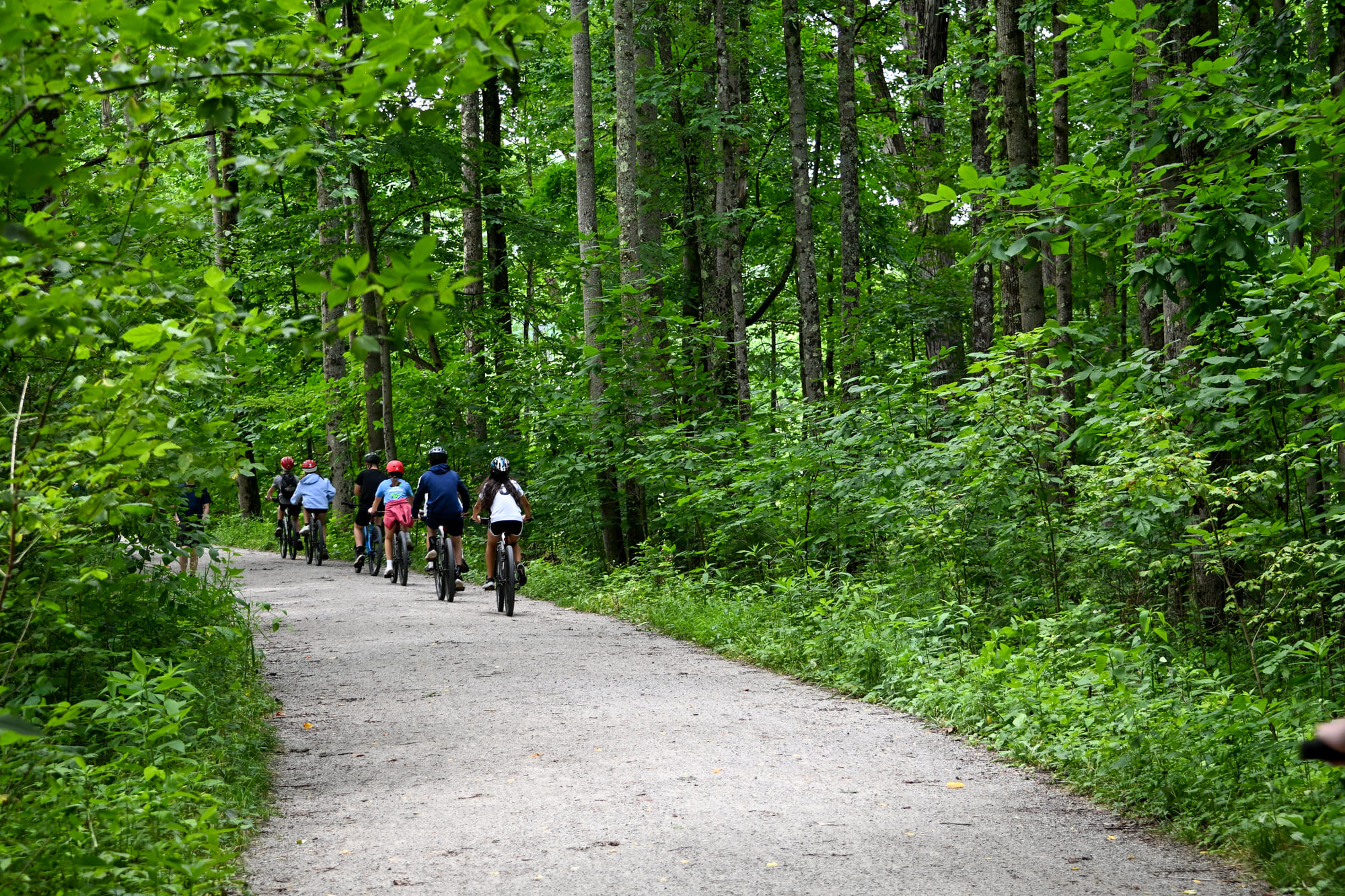
Spring and fall are best suited to road and gravel biking, with a wide variety of surfaces: asphalt, gravel roads, and stone dust trails. In these two seasons, you can link secondary roads between the villages and lakes of Estrie.
Spring: the season of clear roads
Spring suits paved roads. The Axe de la Massawippi, a section of the Véloroute des Grandes-Fourches, starts in Ayer’s Cliff, runs along Lakes Massawippi and Memphremagog and passes through North Hatley on a route that is largely paved, according to Tourisme Memphrémagog. On gravel roads, surface conditions can vary after heavy rain, so it is best to check before you go.
Fall: the season of scenery
Fall combines secondary roads, gravel, and foliage. La Frontalière, an 87.5 km route between Ayer’s Cliff and Newport (Vermont), is 51% gravel roads, and Bonjour Québec describes a variant of about 50 km that avoids crossing the border. The timing of peak colours varies from year to year. Days also get shorter, so plan to dress in layers for early-morning departures.
Summer: developed trails and mountain paths
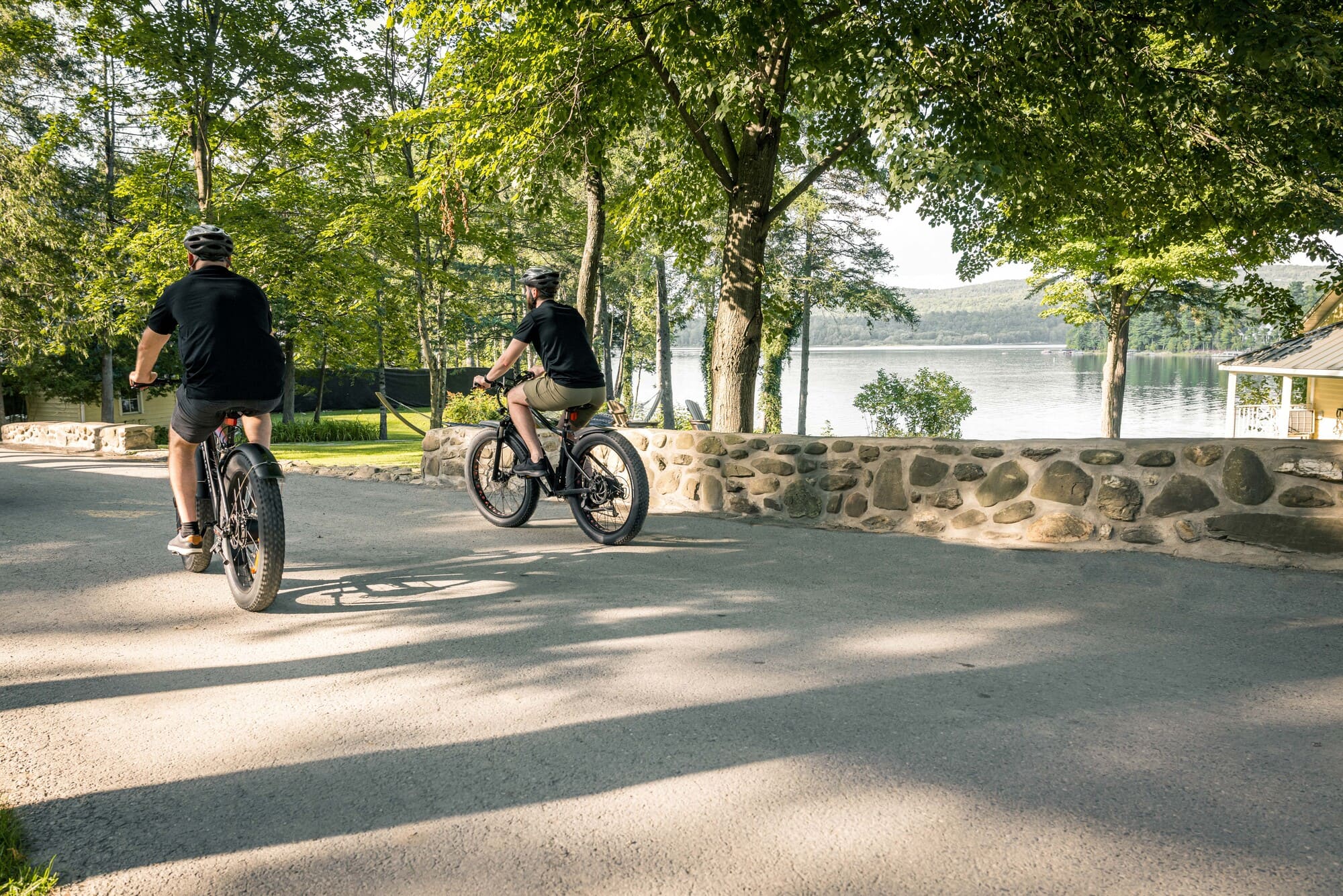
Summer is the season for developed trails and mountain biking, with the widest choice of open routes. Stone dust or paved trails, such as those on the Route Verte, are well suited to outings with family or friends. Trail enthusiasts will find more than 350 km of routes according to Tourisme Cantons-de-l’Est, which cites Plein air Sutton and the Sentiers vélo de montagne des Cantons, among others.
Winter: fat biking in Estrie and the Eastern Townships takes over
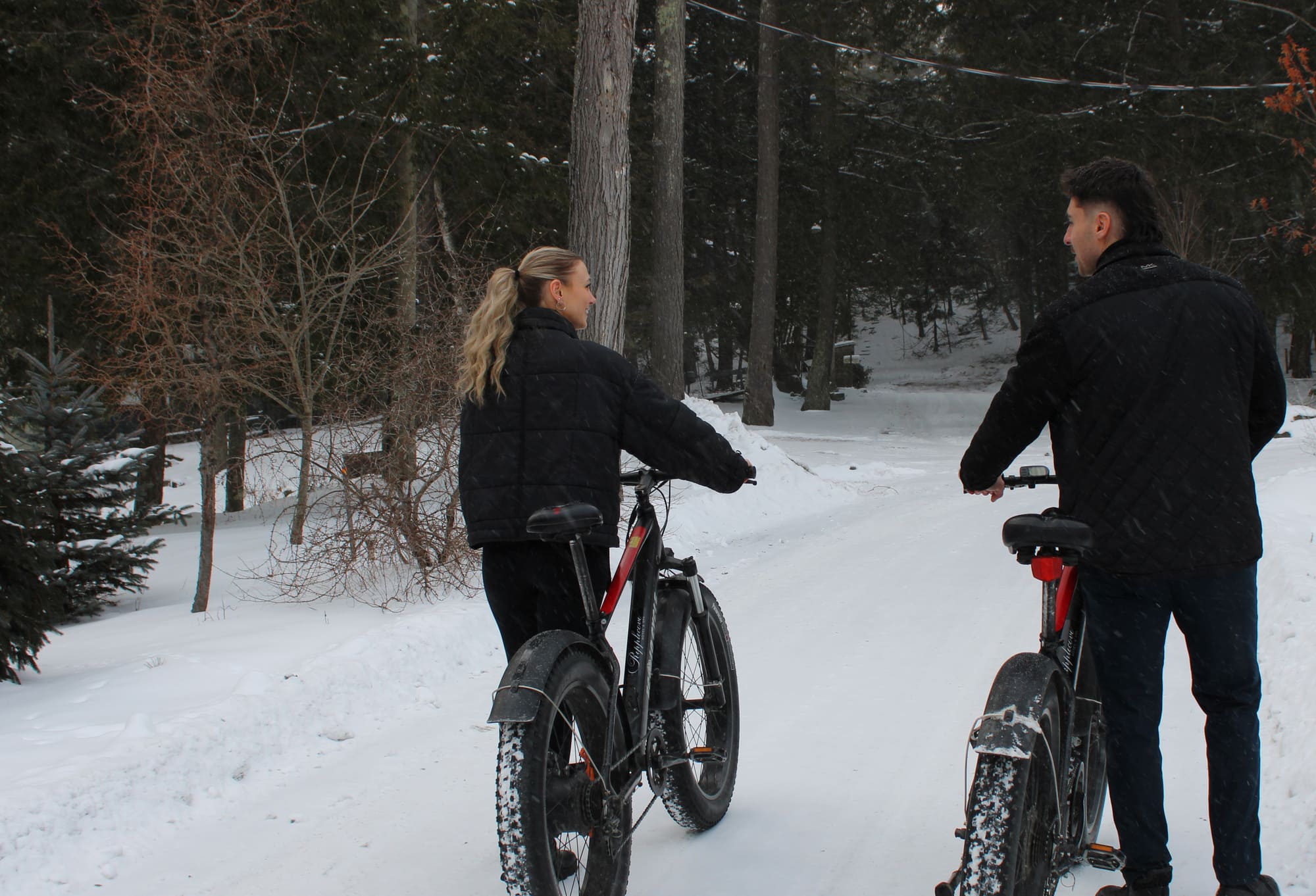
In winter, the fat bike replaces the road and mountain bike: it is the way to ride on snow and ice. Aventure Québec presents this oversized-tire bike as suitable for snow or ice in winter, with trails for all levels. The site lists several fat bike businesses and parks in the Eastern Townships, including the Parc de la Gorge de Coaticook and the Parc des Sommets in Bromo
What is a fat bike, and who is it for?
A fat bike is a mountain bike fitted with tires 4 to 5 inches wide, according to Québec cité. Its French equivalent, recommended by the Office québécois de la langue française, is « vélo à pneus surdimensionnés ». A cyclist who is already comfortable on a bike can try one after a short adjustment period, and sturdy winter boots are enough.
Where to ride in winter in the region
Aventure Québec lists five fat bike locations in the Eastern Townships: the Parc des Sommets in Bromont, the Parc de la Gorge de Coaticook, Les Chèvres de montagne in Saint-Étienne-de-Bolton, Carbure Aventure in Sherbrooke, and Fatbike Lac Brompton in Saint-Denis-de-Brompton. Mont Bellevue and the Estriade circuit, in Granby, are also among the winter suggestions from Grand Québec.
Before a first outing, the Parcs régionaux du Québec recommend checking the weather, wearing an approved helmet, dressing for winter, inflating tires to the indicated pressure, and allowing for short days. They also advise asking the site staff for guidance.
| Season | Suitable bike | level | Terrain | Point to watch |
|---|---|---|---|---|
| Spring | Road, gravel | Beginner to intermediate | Paved roads, gravel roads | Surface conditions after heavy rain |
| Summer | Mountain bike, developed trails | All levels | Mountain trails, stone dust or paved trails | Choose your trail according to your level |
| Fall | Road, gravel | Beginner to intermediate | Secondary roads, gravel roads | Shorter days, dress in layers |
| Winter | Fat bike | Beginner to intermediate, with an adjustment period | Dedicated snow-covered trails | Confirm opening, weather, helmet |
FAQ: four-season cycling in the Eastern Townships
Here are answers to the most common questions about cycling in the Eastern Townships by season.
Can you cycle in the Eastern Townships in winter?
-
Yes, on a fat bike, which can be ridden on snow or ice according to Aventure Québec. Check with each operator that the trails are open before you go.
What is a fat bike?
-
A fat bike is a mountain bike with 4- to 5-inch-wide tires, designed for riding on snow. No advanced technical equipment is needed for a first try, according to Québec Cité.
What is the best season for cycling in the Eastern Townships?
-
There is no single best season: it depends on the type of bike. Spring and fall suit road and gravel biking, summer suits mountain biking and developed trails, and winter suits fat biking. The table above summarizes the choice.
What type of bike should you choose for each season?
-
In spring and fall, you should choose a road or gravel bike; in summer, opt for a mountain bike or a developed trail bike; and in winter, select a fat bike. A standard mountain bike is no substitute for a fat bike on snow-covered trails.
Can you rent a bike on site?
-
Rentals depend on the trail operators and bike shops in the region. Ripplecove’s bikes are reserved for hotel guests.
Are the trails suitable for beginners and families?
-
Yes, several trails are accessible. The Sentier Nature Tomifobia, in Ayer’s Cliff, is a 19 km trail made of stone dust with very little elevation change, according to Bonjour Québec. The page dedicated to the region presents cycling routes near the hotel.
A cycling getaway in Estrie from Lake Massawippi
Ripplecove, in Ayer’s Cliff on the shores of Lake Massawippi, is a starting point for a cycling getaway in any season, whether for cycle touring in Estrie or a day outing. The hotel is Welcome Cyclists certified (Bienvenue cyclistes), a Vélo Québec program, and provides bikes in summer and fat bikes in winter for guests staying there.
Activities offered at the hotel change with the season, and stay packages make it easy to plan a getaway. Booking a stay at Ripplecove Hôtel & Spa means choosing your starting point for riding in the Eastern Townships in every season.